
Chimney Flashing in Plano, TX
A chimney is the single most common place water slips past the shingles, so the flashing there is the part that has to be right, and a local roofer reads what is failing, sets new metal into the roof and the mortar, and shows you the photos.
- Free, documented roof inspection
- The scope and the number, in writing
- Plain-English claim help, on your side
Call (469) 277-7654
Why the chimney leaks, and what actually seals it
A chimney breaks the roof into pieces, and water has to be steered around all four sides of it. That job belongs to layered metal, not sealant: step flashing woven into each shingle course up the sides, base flashing across the front, and counter-flashing set into a cut in the mortar joint so the top edge is locked into the masonry instead of stuck to its face. A bead of caulk smeared over the seam is not flashing, it is a patch, and the Texas sun hardens and splits it within a season or two.
Done right, the metal laps water from the chimney down onto the shingles and off the roof, and on a wide chimney a small built-up ridge behind it, a cricket, splits the runoff so nothing pools against the brick. A local roofer reads the existing flashing and the mortar joint, replaces the metal that has failed, and photographs each side before and after so you can see the seal rather than take it on faith. Because the chimney is where water most often finds a way in, it is also the first place a roof leak repair looks.
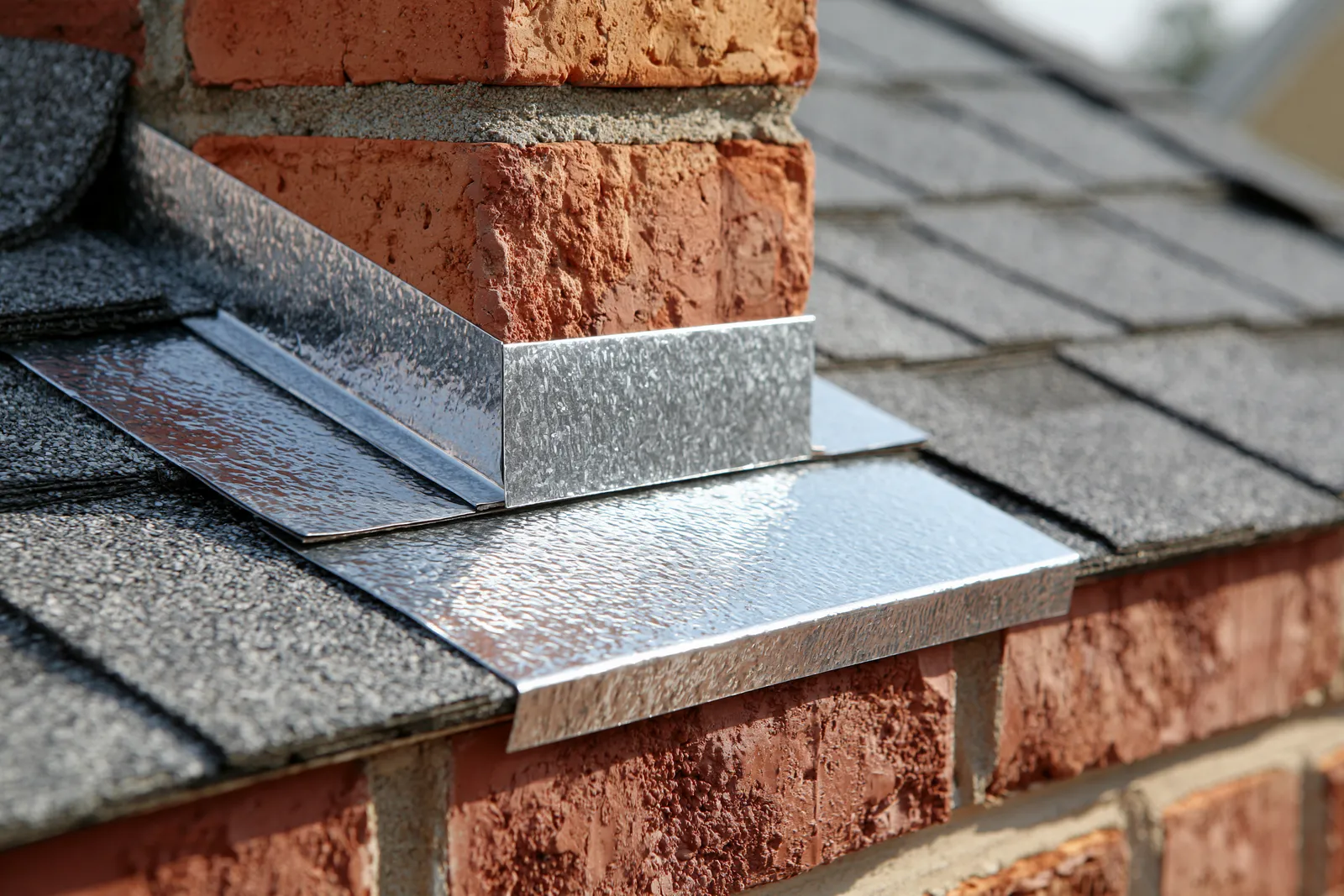
What a chimney flashing repair covers
The metal and the mortar joint, read and rebuilt one side at a time.
- 01Reading the flashing and the mortar
- The existing step and counter-flashing gets pulled back and read, along with the mortar joint it sits in, because a joint that has crumbled will not hold new metal until it is cut clean and repointed.
- 02Step and counter-flashing replacement
- New step flashing is woven back into the shingle courses on each side, and the counter-flashing is set into a fresh cut in the mortar joint and locked in, not surface-caulked, so the top edge is held by the masonry itself.
- 03A cricket behind a wide chimney
- Where the chimney is wide enough to dam water on the up-slope side, a cricket, a small built-up ridge behind it, is added so runoff splits and sheds around the brick instead of backing up under the shingles.
- 04Sealed, then documented
- Every side is sealed at the finish, and the flashing, the joint, and the cricket are photographed and filed, so what was replaced and how it sits is on the record, not described from memory.
Not sure whether the leak is the flashing or the chimney crown above it? A documented inspection puts the real source on camera before any metal is priced.
A flashing repair from first look to last seal
Find where the water gets past the chimney, agree the number, seal it, and confirm it holds, each step on the record.
Find where it gets past
The visit starts at the chimney, where a local roofer checks each side of the flashing, the mortar joint the counter-flashing sits in, and the crown above, then photographs the spot that is actually letting water by so the fix is aimed at the cause.
See the number before work starts
What the repair takes and what it costs is written down and agreed with you before any metal is lifted, so the scope and the figure are both settled first, with nothing added later without your say.
Seal it and confirm it holds
New flashing is set into the roof and the mortar, the seams are sealed, the work is checked against water, and the finished repair with its photos goes into a file that stays yours.
Signs a Plano chimney needs new flashing
Catch these before the water reaches the ceiling below.
- A stain on the ceiling or wall near the chimney chase, often first seen after a hard rain
- Rusted, lifted, or cracked metal visible where the chimney meets the shingles
- A bead of old caulk along the chimney that has hardened, split, or pulled away from the brick
- Crumbling or missing mortar in the joints where the counter-flashing is set
- Daylight, damp brick, or a musty smell in the attic on the side nearest the chimney
Any of these near the chimney after a storm is worth a look before the stain reaches the ceiling, because the flashing is where a small failure turns into an interior leak fastest.
What a flashing repair runs, next to a full roof
Set against a full replacement, chimney flashing is a small, contained number: it is one part of the roof, not the whole covering, and the point of fixing it is to stop a leak before it reaches the decking and the ceiling below.
The figure tracks what the job needs. A reseal of sound metal is modest, a full step-and-counter replacement with fresh mortar work runs higher, and adding a cricket behind a wide chimney adds to it. None of that is a flat rate set in advance, your roofer writes the honest number once the flashing and the joint have been read, not before.
See honest cost ranges- Flashing is a component repair, a small fraction of what a new roof costs
- A simple reseal is modest, a full step-and-counter replacement runs higher
- A crumbled mortar joint that needs repointing, or a cricket on a wide chimney, adds to the figure
- The written number is set only after the flashing and joint are read, so it is not a moving target
What tends to happen at a Plano chimney
Much of Plano's housing was built around 1985, which means a lot of these chimneys sit in mortar joints that are now thirty-plus years old. Mortar dries and crumbles with age, and the counter-flashing set into those joints loosens as it goes, so the seal that once held water off the brick starts to let it seep.
Weather only speeds that along. A hard wind works a lifted edge of counter-flashing looser, and a hailstorm dents and creases the metal and knocks the last life out of a tired caulk seam, so the chimney is often the first place a Plano roof starts to leak after a rough spring. Catching it while it is still just the flashing is what keeps it from turning into a decking and ceiling repair.
- 01Aging mortar loosens the seal
- On a mid-1980s Plano chimney the mortar joints are decades old, and as they crumble the counter-flashing set into them loosens, which is where water starts working in.
- 02Hail and wind hit the metal
- Collin County hail dents and lifts chimney flashing and hard gusts pry at its edges, so a seam that was holding can open after a single rough storm.
- 03The chimney leaks before the field does
- Because the flashing and the joint give out well before the open shingles wear through, the chimney is usually the first leak a Plano homeowner sees, and the first one worth chasing down.
When the leak has already reached the decking or the ceiling, the flashing repair becomes part of a wider roof repair that closes every opening water found, not just the one at the chimney.
Chimney flashing questions
What Plano homeowners ask before booking a flashing repair.
Q1Why does my chimney leak when the rest of the roof is fine?
Q2Can the roofer just caulk the chimney to stop the leak?
Q3What is a chimney cricket and does mine need one?
Q4Hail last year loosened the flashing, will insurance cover it?
Q5How long does a chimney flashing repair take?
Q6Does a flashing repair come with a warranty?
Get your Plano chimney flashing sealed in writing
Send Plano Premier Roofing a photo of the chimney and a local roofer reads the flashing and the mortar joint, tells you straight whether it is a reseal or a full step-and-counter replacement, and puts one honest number and a clear timeline in writing before any metal is lifted. If a storm is what loosened it, roof insurance help walks through documenting the damage for a claim.