
Flat Roof Repair in Plano, TX
On a flat or low-slope roof the water sits instead of running off, so it finds a loose seam or a cracked penetration long before it finds the drain, and a repair starts by tracing that pool back to the joint that opened.
- Free, documented roof inspection
- The scope and the number, in writing
- Plain-English claim help, on your side
Call (469) 277-7654
Why a flat roof leaks at the seams, not the middle
The wide, open middle of a flat roof is rarely where it fails. The field membrane out there is usually doing fine; the leak is almost always at a seam where two sheets meet, at a penetration where a vent or pipe comes through, or where the membrane turns up a wall and terminates. Add water that ponds instead of draining, and those joints are exactly where it works in.
This page is for the low-slope roofs on Plano homes: a patio cover, a porch, a room addition, the flat section on a contemporary house. A local roofer traces the pond back to the open joint, re-seams or patches it, and resets the flashing so the water drains instead of standing. A large commercial flat roof is a different animal, sized and detailed for a building, and commercial roofing covers those.
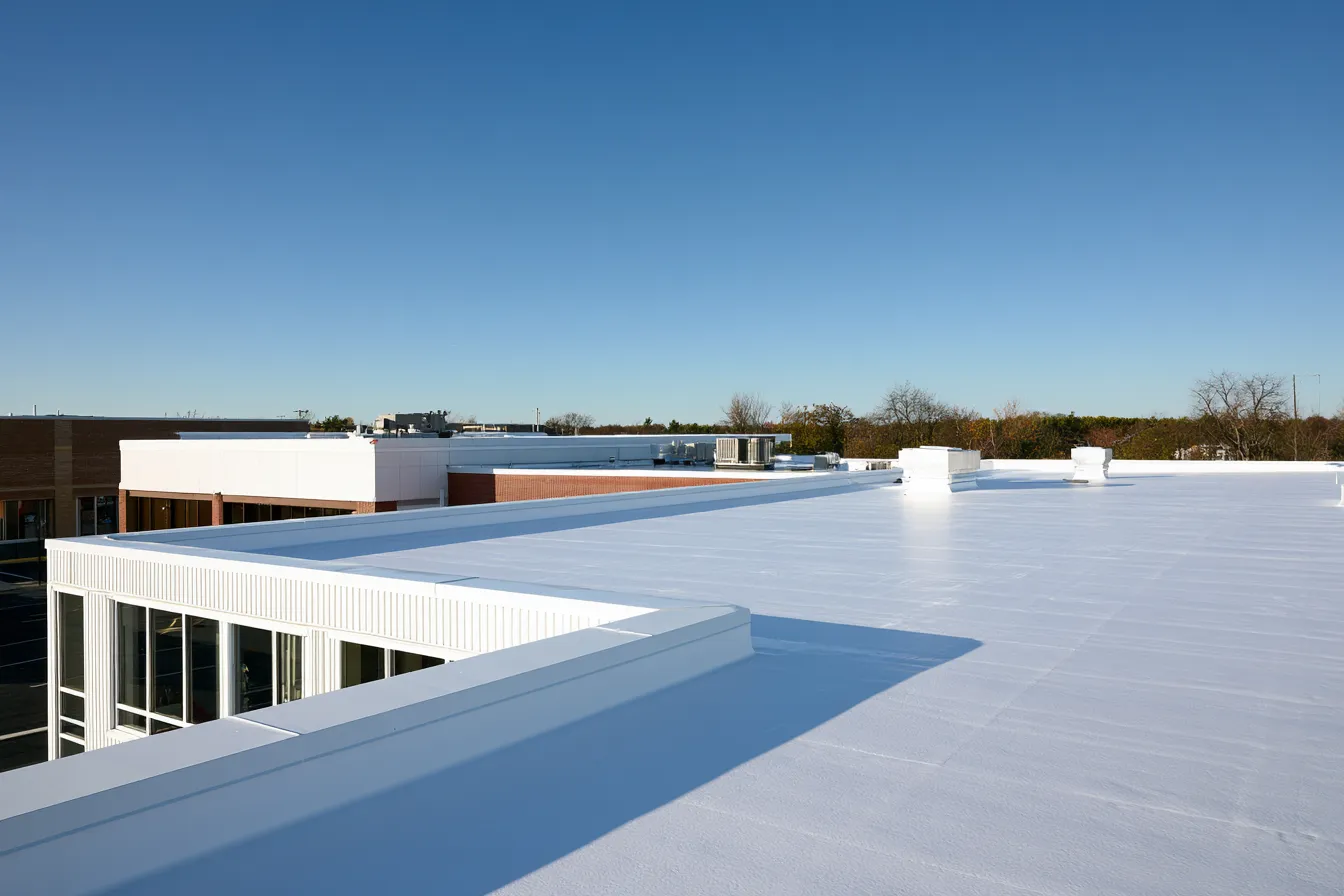
The joints a flat-roof repair closes
The seams, penetrations, and terminations that fail first, found and mended one at a time.
- 01The pond and the joint under it
- Standing water marks the low spot, not the leak, so the ponding is mapped and the seam, penetration, or termination feeding it is traced and confirmed before anything gets sealed.
- 02Open seams and punctured membrane
- Where two sheets meet, the bond dries and lifts, and a dropped tool or a hail hit can puncture the field; the affected seam is welded or re-adhered and the puncture patched into the membrane.
- 03Flashing at walls and penetrations
- Where the membrane turns up a wall or wraps a vent, pipe, or curb is the most common way water gets under it, so that flashing and its termination bar are reset and resealed.
- 04Drains, scuppers, and the slope to them
- Water that cannot leave is water that finds a way in, so the drains and scuppers are cleared and the drainage path is rechecked to cut the ponding that started the trouble.
Not sure whether the trouble is the flat section or the pitched roof draining onto it? A documented roof repair traces the water across both before any number is set.
A flat-roof repair from ponding to water-tight
Find the pond and the joint, agree the number in writing, seal it, and prove it drains, each step on the record.
Find the pond and the joint
The visit starts at the standing water: a local roofer maps where it collects, traces it back to the open seam, penetration, or termination, and photographs the cause so the fix is aimed at the real joint, not the wet spot on the ceiling below.
Settle the number in writing first
What the repair needs, whether a re-seam, a patch, reset flashing, or a cleared drain, and what it costs is written down and agreed with you before a seam is opened, so the price and the timeline are both settled up front.
Prove it drains, on the record
The repair is water-tested, the drainage is checked so the pond does not simply return, and the finished work with its photos goes into a file that stays yours.
Signs a Plano flat roof needs repair
Catch these while it is still one seam, not the whole membrane.
- Water that stands on the roof more than a day or two after a rain, leaving a dark ring where it ponds
- A seam that has lifted, curled, or opened where two sheets of membrane meet
- Blisters, bubbles, or soft spots in the membrane underfoot, a sign moisture is already trapped below
- A stain on the ceiling under a patio cover, porch, or flat addition after a storm
- Cracked or pulling flashing where the membrane meets a wall, or a drain clogged and holding water
A ceiling stain under a low-slope section after a storm is worth tracing before it spreads, and if the leak is stubborn or seems to move, roof leak repair follows it to its true source across the roof.
What a flat-roof repair runs, and when to recover instead
Against recovering the whole low-slope section, a repair is a small number, and the point of it is the same as any repair: seal the one joint that is leaking and buy real years while the membrane still has life left in it.
The price tracks the fix. A single re-seam or a patch on sound membrane is inexpensive; resetting a run of flashing or clearing and reworking the drainage costs more; and a membrane that is brittle and blistered across the whole field starts to argue for a full recover instead. Your roofer sets the honest repair figure in writing once the leaking joint is found, not before, and never as a number over the phone.
See honest cost ranges- A single open seam or a small puncture is a repair, not a reason to redo the roof
- A re-seam or a patch on sound membrane is inexpensive; resetting flashing or reworking drainage runs higher
- Damage held to one seam or penetration repairs well; a brittle, blistered field leans toward a full recover
- The written figure is set only after the leaking joint is found, so it is not a number that moves later
What tends to fail on a Plano low-slope roof
On Plano homes the low-slope roofs are usually the smaller ones: a patio cover, a porch, a carport, a room addition, or the flat planes on a contemporary house. The Texas sun works on them hardest, drying the bond at the seams and the sealant at the flashings until a joint that held for years finally opens.
Hail leaves its own mark, pocking the membrane in spots that hold water fine that afternoon and give out a season later. A lot of these low-slope sections date back to the 1980s and 90s builds and are on aged membrane by now, so it is almost always a seam, a penetration, or a termination that fails first, not the open field.
- 01Sun-baked seams and sealant
- The DFW sun dries the bond at every seam and the sealant at every flashing, so on a low-slope roof those joints are the first to open, well before the field membrane wears out.
- 02Hail-bruised membrane
- Collin County hail can fracture a membrane without leaking that day, then fail later, which is why a low-slope roof is worth a look after a storm even when the ceiling is still dry.
- 03Ponding at the drains
- Where the slope is shallow or a drain is clogged, water stands instead of leaving, and standing water is what works a tired seam or penetration open in the first place.
Bruised membrane and a still-dry ceiling can sit quiet for months, so the honest read comes from getting eyes and a camera on the low-slope roof after a storm, before any number is quoted.
Flat roof repair questions
What Plano homeowners ask about their low-slope roofs.
Q1Can a flat roof section be repaired, or does the whole membrane have to be replaced?
Q2What causes flat roofs to leak in Plano?
Q3My patio cover is a flat roof and it is leaking, can that be fixed on its own?
Q4The hail last fall may have hit my flat roof, would insurance cover the repair?
Q5What are flat roofs made of, and does the material change the repair?
Q6Does a flat roof repair come with a warranty?
Get your Plano flat-roof repair in writing
Get a documented look from Plano Premier Roofing and a local roofer maps where the water stands, traces it to the open seam or the tired flashing, and puts one honest number and a clear timeline in writing, repair or recover, with no pressure to sign. You see the pond, the joint, and the fix in photos before the work is approved.