
Roof Ventilation in Plano, TX
A Plano attic can climb past 140 degrees on a July afternoon, and that trapped heat bakes the shingles from below and pulls years off the roof. A local roofer measures whether your attic actually moves air, then balances the intake and exhaust so the heat has a way out.
- Free, documented roof inspection
- The scope and the number, in writing
- Plain-English claim help, on your side
Call (469) 277-7654
The airflow that decides how long your shingles last
Ventilation is not one vent, it is a loop: cool air pulled in low at the eaves, hot air pushed out high at the ridge, moving steadily so the attic never turns into an oven. When the intake is painted shut or the exhaust is undersized, that loop stalls, the air just sits, and the heat has nowhere to go.
In a Plano summer a stalled attic runs brutally hot, and the shingles cook from the underside, aging faster than they should and putting the manufacturer's warranty at risk. The roofer measures the airflow your roof actually has against what the code and the shingle maker call for, then balances it, and the cleanest time to do that is during a roof replacement, when the ridge is already open.
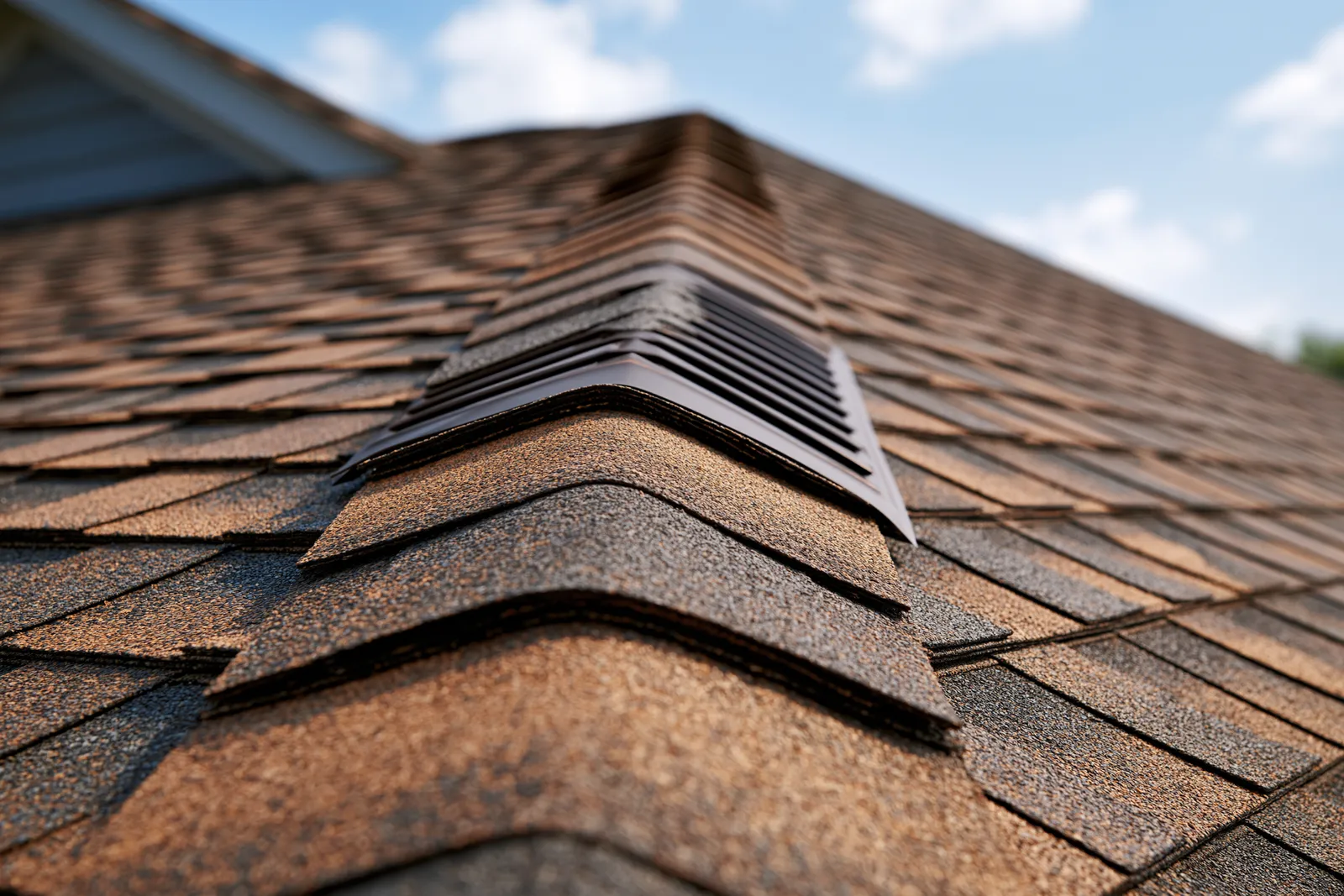
What a ventilation job covers
The intake, the exhaust, and the balance between them, measured and set on the record.
- 01Measure the net free area against code
- The attic's square footage sets how much vent area the building code and the shingle warranty require, so that number is measured first and the fix is sized to the roof instead of guessed at.
- 02Confirm and clear the intake
- Cool air has to enter low or nothing moves, so the soffit vents are opened, cleared of paint and blown-in insulation, and fitted with baffles that keep the intake feeding the ridge rather than choking off.
- 03Set balanced exhaust at the ridge
- With the intake confirmed, the exhaust is matched to it, usually a continuous ridge vent along the peak, so hot air leaves high across the whole roof instead of through a few scattered boxes or a spinning turbine.
- 04Confirm the air actually moves
- The finished system is checked to prove air travels intake to ridge the way it should, and the sizing and the photos go in a file that stays yours.
Blocked or rotted intake is the most common reason a Plano attic will not breathe, so when the eaves themselves need work, soffit and fascia repair restores the intake side before the exhaust is ever set.
A ventilation fix from attic read to airflow check
Measure what is there, agree the number, prove the air moves, each step on the record.
Read the attic as it is
The visit starts up in the attic: a local roofer measures the intake and exhaust the roof carries now, notes how much heat is held up there, and looks for the rusted nail tips and stained insulation that mark trapped moisture, all photographed before any number is quoted.
See the number before work starts
What the roof needs to reach a balanced system, and what it costs, is written down and agreed with you first, so the scope and the price are both settled before a vent is cut, with no figure moving later.
Confirm the air moves, on the record
Once the intake and exhaust are set, the airflow is checked from eave to ridge, and the finished system with its measurements and photos goes in a file that stays yours.
Signs a Plano attic is under-vented
The tells that heat and moisture are trapped up top.
- An upstairs that stays hot long after sunset, whatever the thermostat reads
- Shingles curling, blistering, or wearing out well short of their rated years
- A wall of heat that hits you the moment the attic hatch opens in summer
- Rusted nail tips, damp insulation, or a musty smell up in the attic
- Frost or beads of condensation on the underside of the decking after a winter cold snap
Not sure whether your attic is breathing? A documented inspection measures the intake and exhaust and puts the attic temperature on the record before any work is proposed.
What Texas heat does to a Plano attic
From June through September the DFW sun keeps a poorly vented attic hot long into the evening, and a sealed Plano attic can sit well above 140 degrees on the worst afternoons. A lot of Plano's older attics were vented to a lighter standard than today's code and shingle warranties expect, so they hold that heat instead of shedding it.
That trapped heat is what quietly ages a Texas roof: the shingles cook from below, the sealant softens, and the rated lifespan shrinks. Balancing the intake and exhaust is what turns that around, and a local roofer sizes it to the attic so the roof runs cooler and the warranty terms stay intact.
- 01Heat that never leaves
- Without a working loop, the sun's heat builds through the day and lingers into the night, so the attic and the rooms under it stay hot and the air conditioner never quite catches up.
- 02Shingles aged from below
- A baked deck cooks the shingles from the underside, softening the sealant and pulling years off the roof, and that is exactly the wear a balanced system is built to slow.
- 03Warranty terms at stake
- Shingle makers write their coverage around a balanced attic, so an under-vented roof can lose protection on the heat damage it is most likely to suffer.
The read that settles it is a measurement, not a guess: the vent area the roof carries now against what its square footage and its shingles actually require, put on the record before anything is proposed.
Roof ventilation questions
What Plano homeowners ask before balancing an attic.
Q1Why does attic ventilation matter in a Plano summer?
Q2Can poor ventilation really cut into my shingle warranty?
Q3What is the difference between ridge vents, box vents, and turbines?
Q4Do I need more vents, or better airflow?
Q5Is a reroof the right time to fix ventilation?
Q6How do I know if my 1980s or 90s Plano home is under-vented?
Get your Plano attic ventilation measured
Come to Plano Premier Roofing first and a local roofer measures the intake and exhaust your roof carries now, sizes a balanced system against the code and your shingle warranty, and puts the scope and one honest number in writing before a single vent is cut.